Why everyone had that one couch.
Brown floral, three cushions, indestructible. It was in your house and it was also, somehow, in everyone else's.
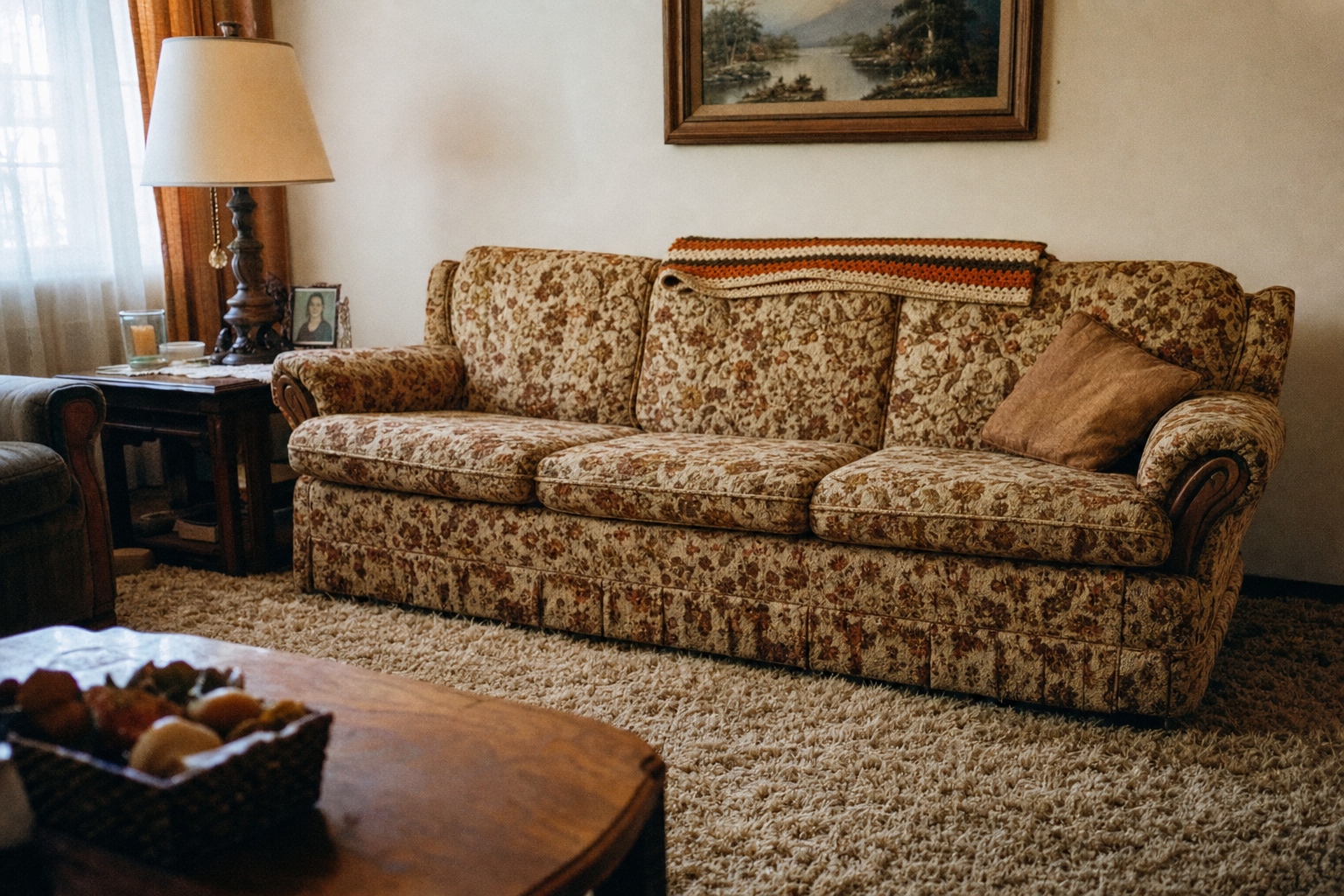
Ask anyone over a certain age to describe the couch of their childhood and you will get, with alarming consistency, the same object: brown or rust, floral or plaid, three cushions, wooden feet, upholstery with the tensile strength of industrial carpet.
There is a boring explanation and a better one. The boring one is manufacturing. A small number of regional furniture makers supplied a large number of showrooms, and those showrooms ordered the fabrics that hid stains, because the customer was a family with a toddler and a full-length shag rug and no expectation of ever reupholstering anything.
The better explanation is that furniture was still bought as an infrastructure decision. You were not expressing yourself. You were solving the problem of where six people sit for eleven years. Under that framing, a fabric that looks like a hotel lobby's idea of a garden is not a style failure. It's a maintenance strategy.
The couch was also a public object. It held guests, homework, sick days, arguments, and at least one animal that was not supposed to be on it. The middle cushion had a documented history. Someone in the family had a claim on the end nearest the lamp, and everyone honored it.
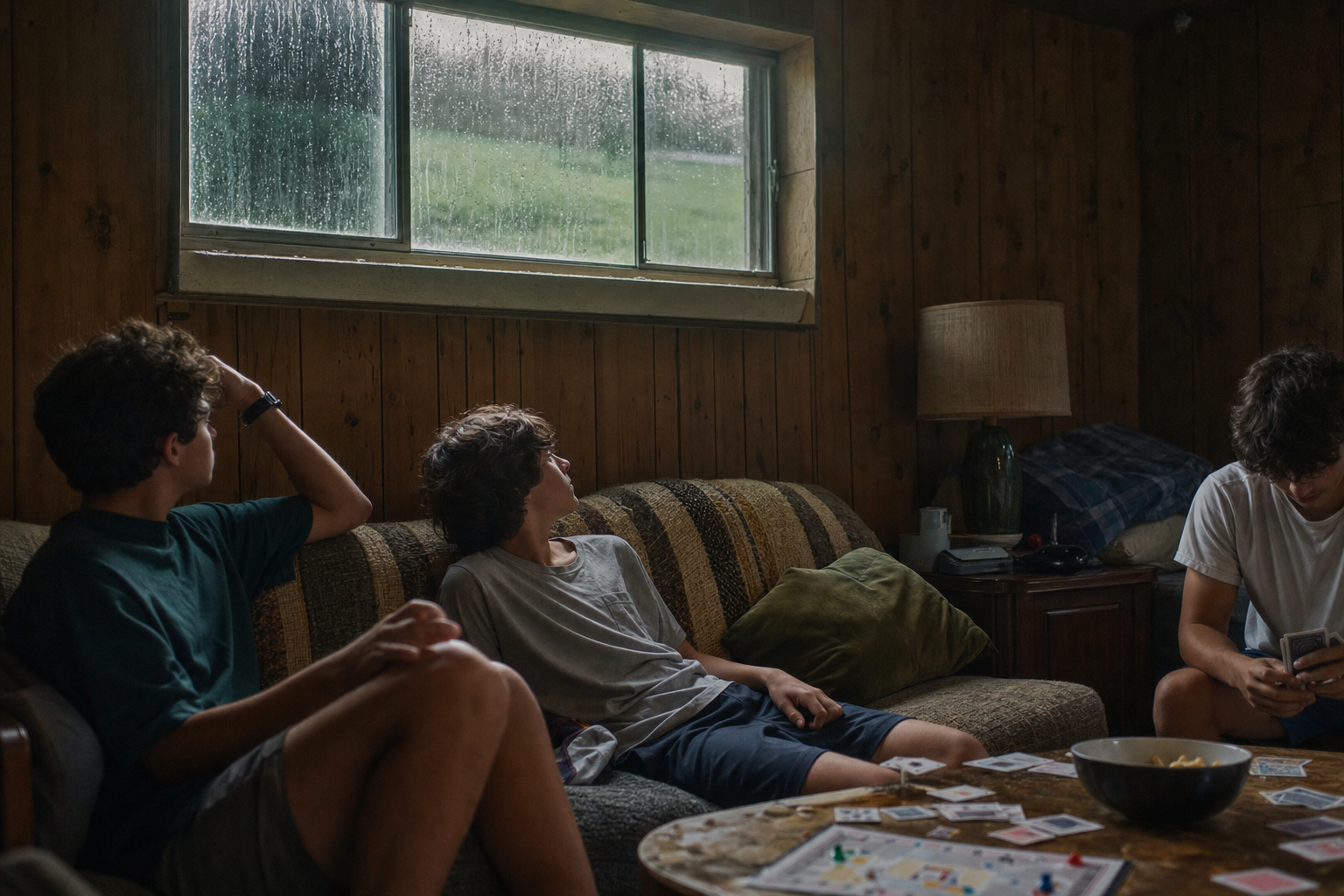
It went out with the paneling, replaced by something lighter, greyer, and dramatically less able to survive a juice box.
Which is why the picture of it hits so hard. It isn't the sofa. It's that nobody in the photograph is worried about the sofa.
“A whole decade agreed on one fabric and then denied it ever happened.”
Otherwise Ordinary publishes original fiction and invented reporting. Names, places and businesses in this piece are made up.