The Last Day at the Dock
A five-part series about being young, carefree and convinced it would last forever.
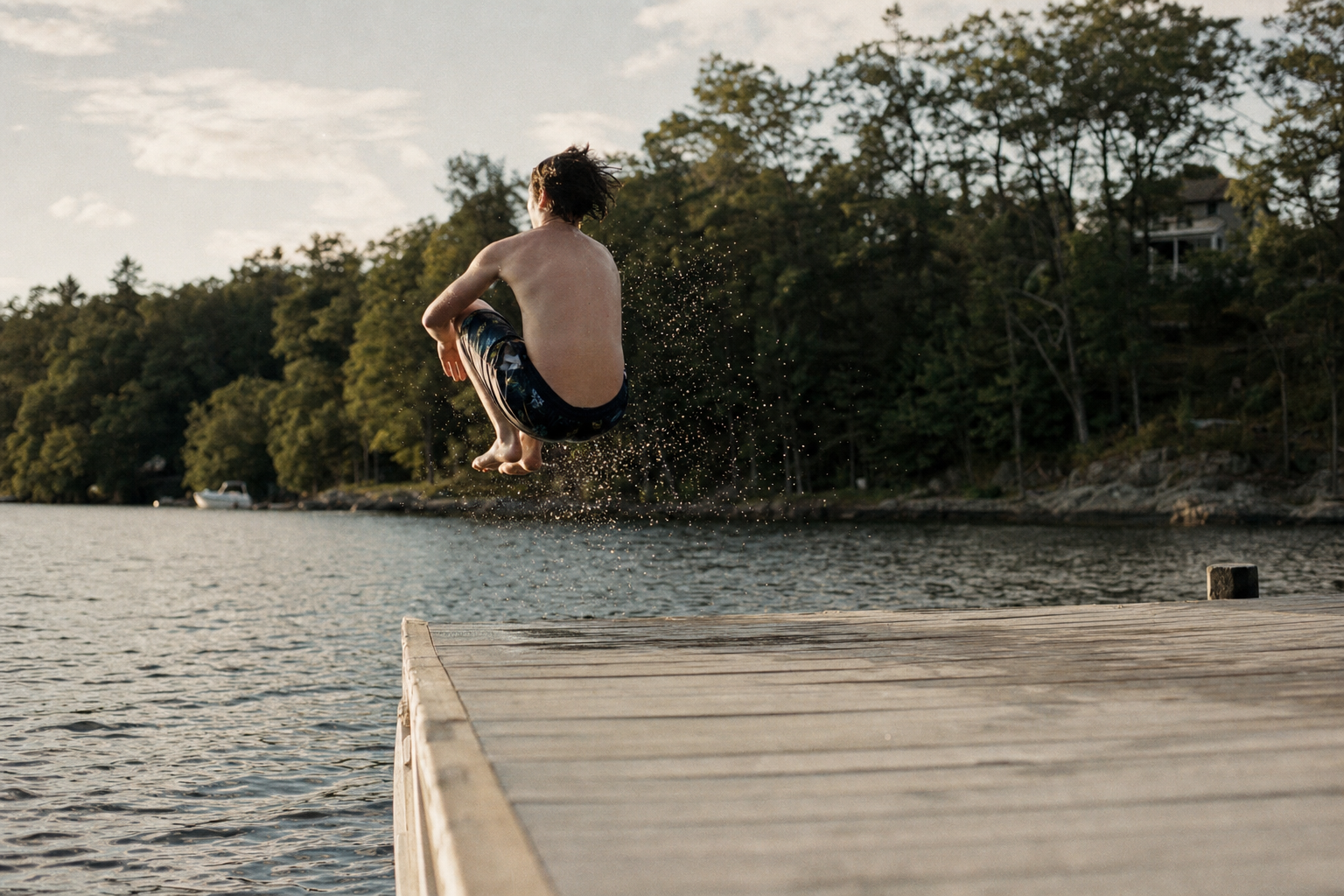
The water was colder than it should have been in August, a fact we registered without comment. We were at the lake. We jumped from the left side of the dock, and the shock of the cold was part of the point. Tommy Ferro finally managed a credible cannonball, sending a plume of water into the air that caught the late-afternoon sun. The arguments from the basement during the rainy week felt like they had happened in a different year, to different people. We had talked them out, or worn them out, until they were just smooth, silent stones in our pockets.
Someone, maybe Tommy, said something about the buoy. The word just floated over the water for a moment. It was not a challenge anymore, just a noise. This time, one of us answered. “No,” said a voice, and that was all. There was no counter-argument. We had learned, in Michael's absence, to accept a simple ending. The empty chair was not a space to be filled anymore; it was just a fact of the new arrangement, like the colder water.
Instead, we invented a game that required no travel. The goal was to climb onto the dock from the water without using the ladder and without making a sound. It was impossible, a contest of quiet failures. A scraped elbow, a grunt of effort, a final splash of defeat. We did this for an hour, maybe more, taking turns, our attempts growing quieter and more deliberate. We were a committee of three trying to solve a problem that had no solution, and for the first time since the rain, it felt like we had a purpose.
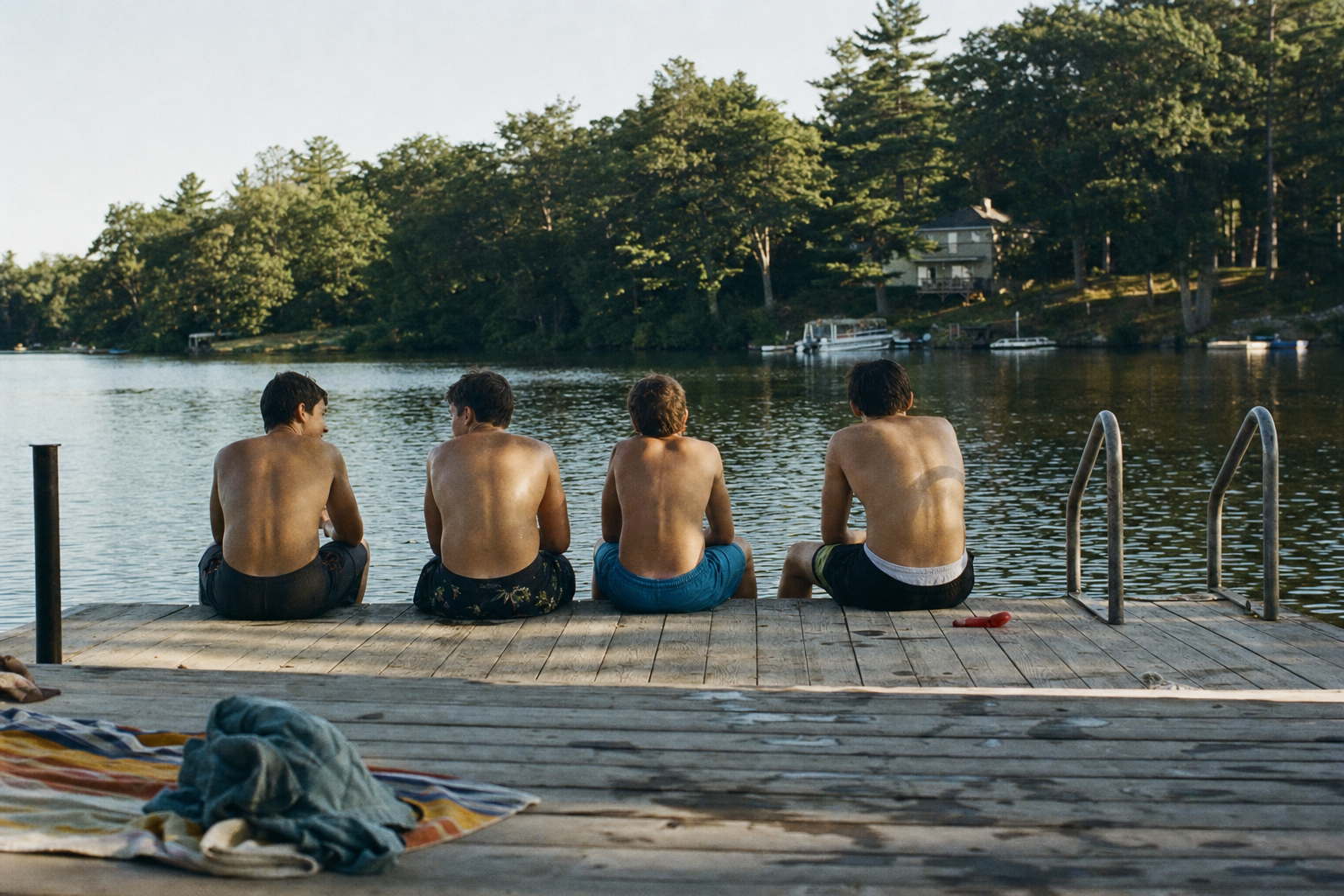
The sun lowered itself behind the tree line on the far shore, and the sky went from blue to a deep, bruised orange. The air grew cool. We sat in a row on the edge of the planks, our legs dangling, feet making faint ripples. Our towels were damp and smelled of lake water and laundry detergent. Nobody suggested it was time to go. We were waiting for a signal that we knew was not coming — not a parent’s call from the shore, not the snap of the streetlights turning on. We were waiting for the day to tell us it was over.
A car horn honked twice from the gravel lot. It was a sound that did not belong here. We saw a familiar station wagon, and my older brother was leaning against the driver's side door. He did not shout. He just waved once, a slow gesture that meant now. We stood up without discussion. We gathered our towels and our shoes. The walk up the path felt longer than it ever had before, the gravel sharp under our bare feet. “Mom said we’re going for sneakers tonight,” he said when we got to the car. “School’s Monday.”
The drive home was quiet. We watched the familiar houses pass by the window, their porch lights starting to come on one by one. The day had dissolved, the way they always did, but this one left a different kind of silence. It was the last time we were all at the dock together. The rock is still there, I assume, under four feet of water.
“The day had dissolved, the way they always did, but this one left a different kind of silence.”
Otherwise Ordinary publishes original fiction and invented reporting. Names, places and businesses in this piece are made up.