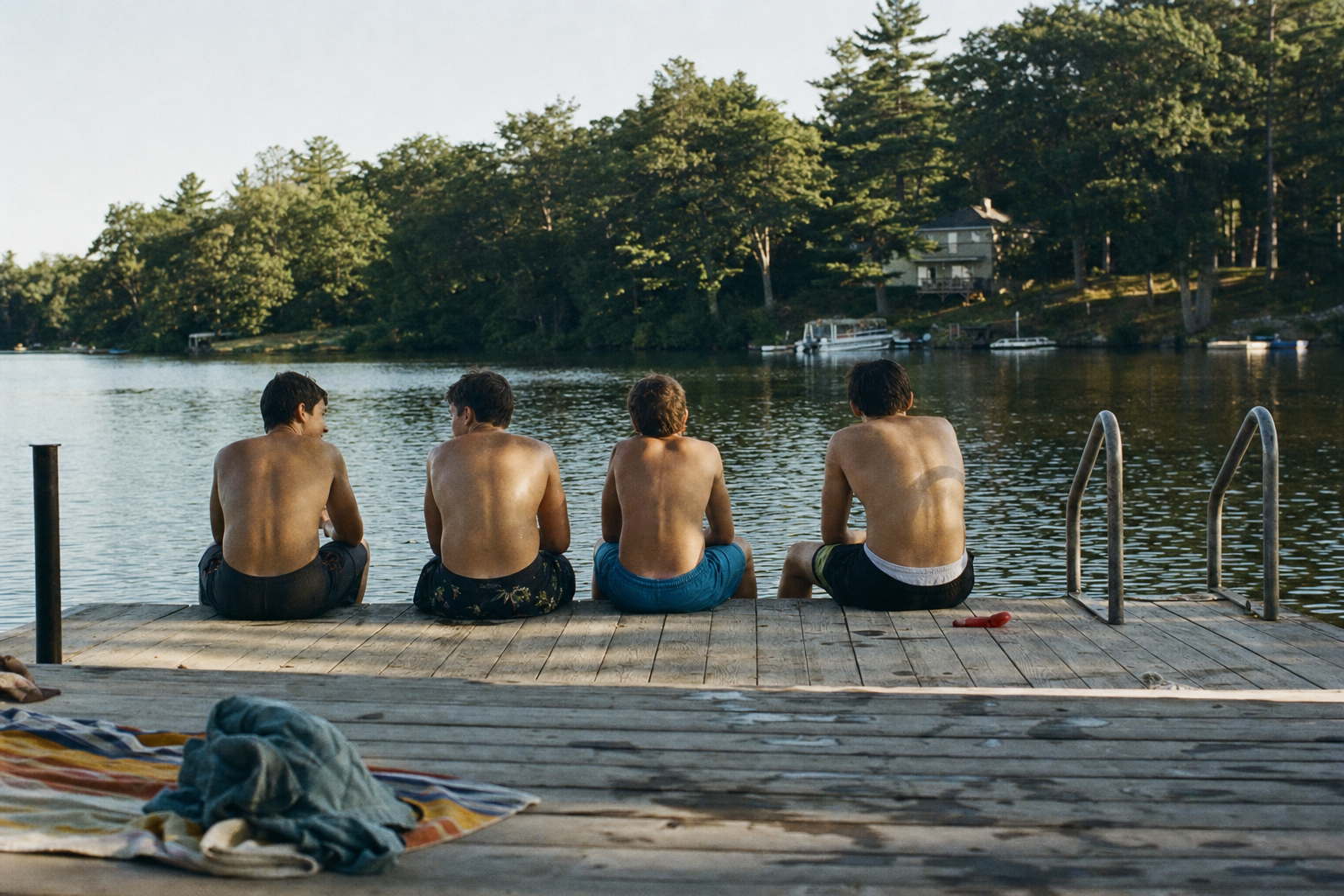
The appliance that outlived three houses.
It weighs twenty-six pounds, it has one speed that works, and it will be in the family longer than the family.
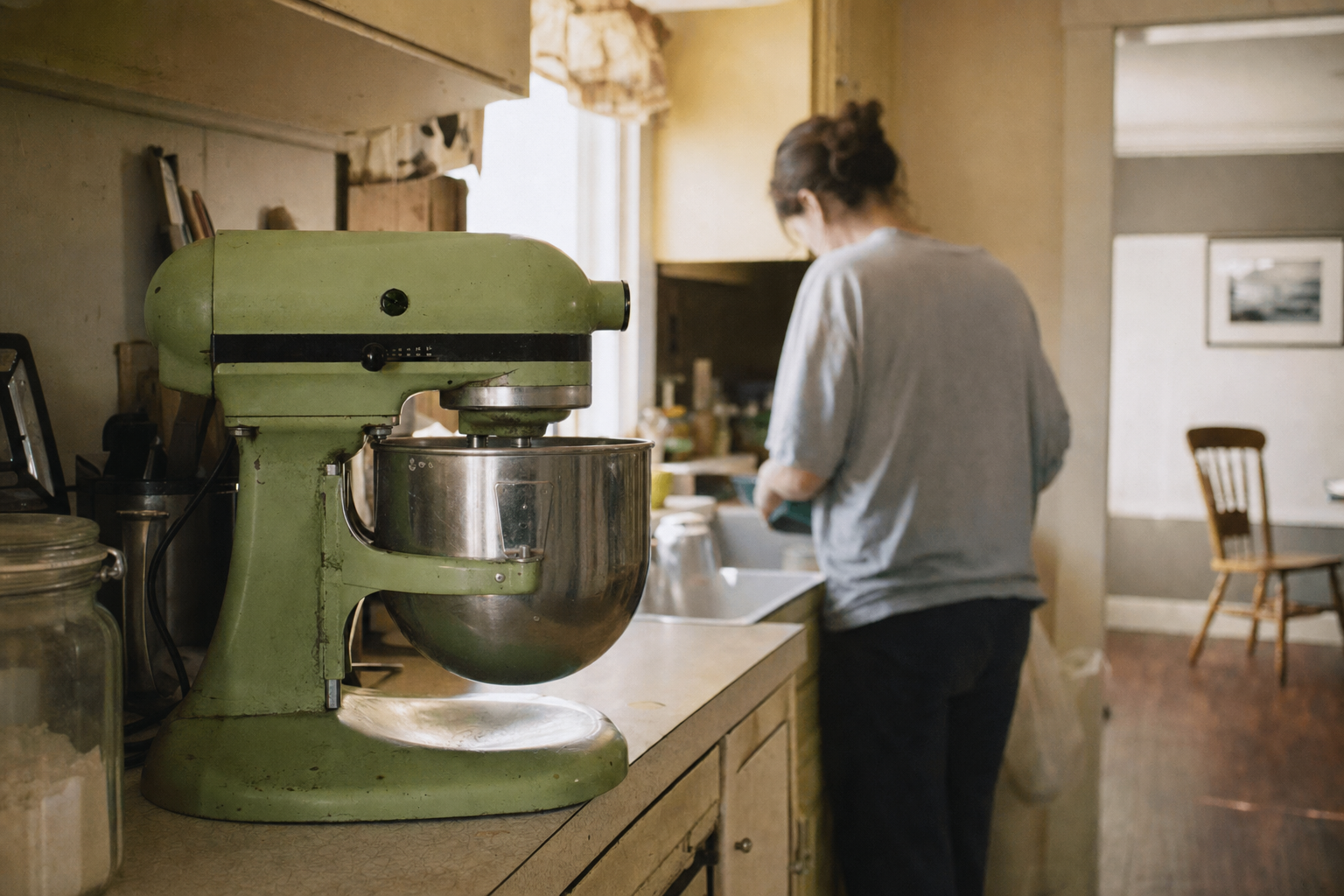
The mixer is avocado green, which dates it precisely, and it lives on the counter because it is too heavy to keep in a cabinet and too useful to give away. It has been in three houses and two marriages.
Speed two does not work. Nobody has ever fixed speed two. Instead, the household developed a folk knowledge — you start on one, you jump to three, you hold the bowl for the first ten seconds — and that knowledge got taught to children who then taught it to their own children, none of whom found it strange.
This is what heavy appliances do. They are difficult enough to replace that families build habits around their defects, and then the habits get inherited, and then the defect is a tradition.
There is a category of object like this in every house: the one that survives the moves. It's usually heavy, usually older than the people using it, and usually associated with somebody dead. You do not keep it because it's good. You keep it because getting rid of it would require a decision, and nobody wants to be the one who made it.
Someone in the family will eventually inherit it, put it on a new counter, plug it in, and reflexively skip speed two without ever knowing why.
“Objects that are hard to move end up defining the rooms they're in.”
Otherwise Ordinary publishes original fiction and invented reporting. Names, places and businesses in this piece are made up.