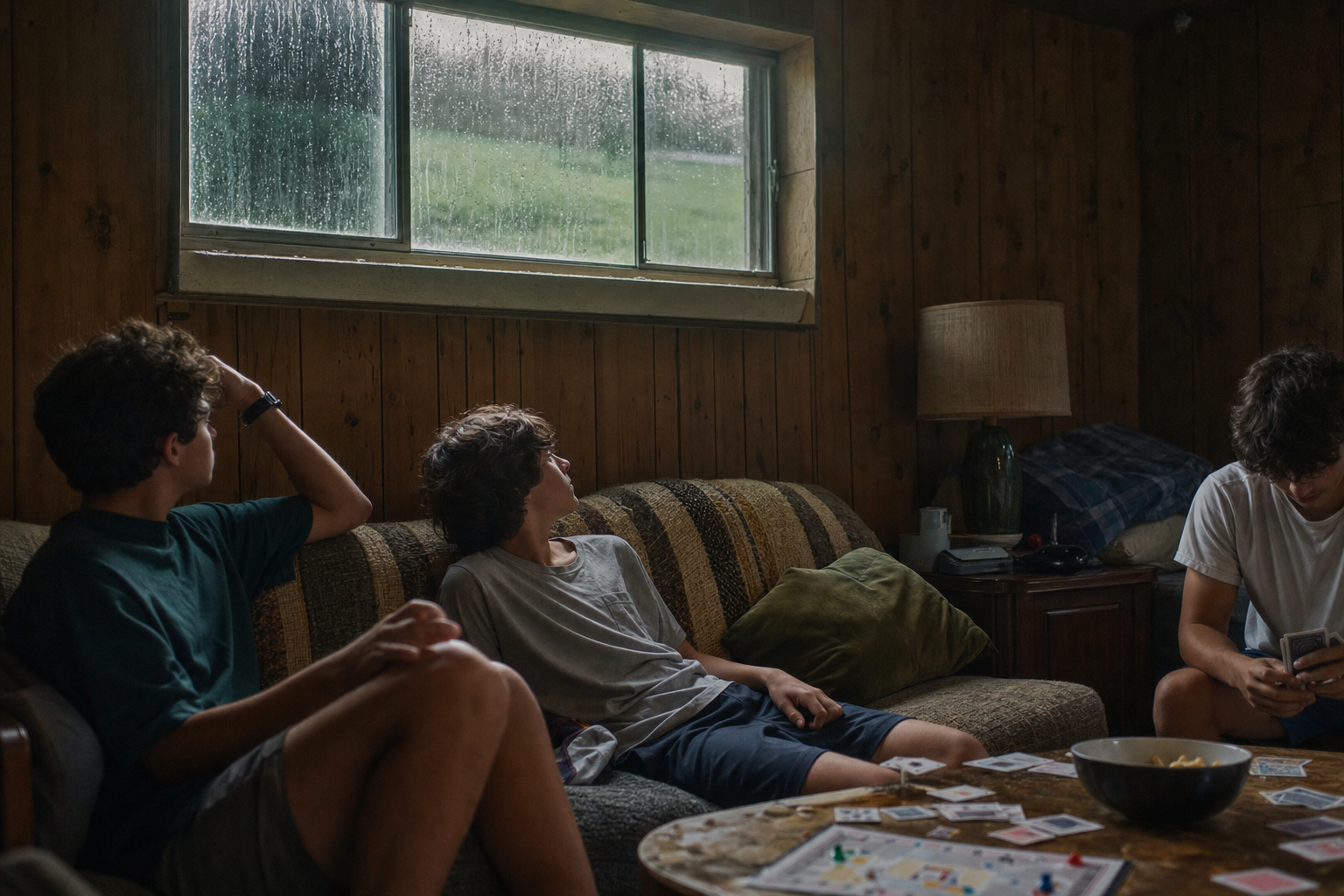
We used to call people's houses and just hope the right person answered.
The corded phone was a shared family object, and it made every conversation a small act of courage.
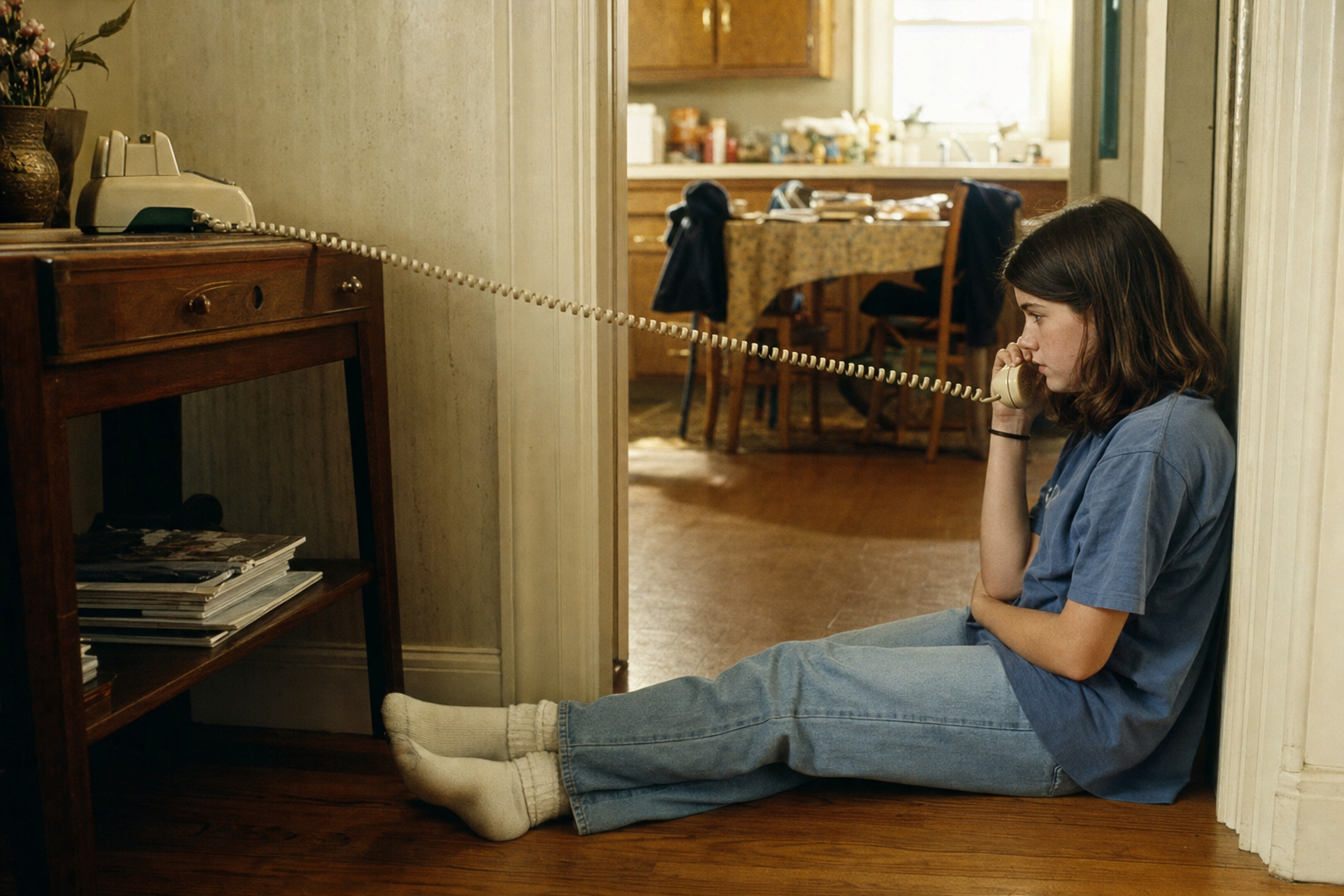
There was a specific choreography to it. You stretched the cord around the corner, into the hallway, as far as the coil would allow, and you sat on the floor with your back against the wall because that was the only place the cord reached.
Before any of that, though, there was the dialing — and the dialing was the hard part. You were not calling your friend. You were calling your friend's father, statistically speaking, and you had to be prepared to say your full name to a man who had no reason to remember it.
"Hi, is Jenna there?" was a sentence you rehearsed. Sometimes you hung up before the second ring. Sometimes you got the little brother, who was a hazard. Sometimes you got the mother, who would ask you three polite questions and then set the phone down on a counter and yell up a staircase, and you would sit there listening to the ambient sound of somebody else's kitchen — a faucet, a television, a chair moving — which is a kind of intimacy nobody has anymore.
The busy signal was information. It meant someone was home, someone was talking, and it wasn't to you. The unanswered ring was information too, and it just meant: try later, at the pace of a whole evening.
None of it was necessarily better. It was just slower, and that slowness changed things. You couldn't casually send a half-formed thought; you had to care enough about the conversation to risk having the father answer the phone.
What we lost isn't the phone. It's the household as a unit — the idea that reaching one person meant briefly touching the whole family, saying hello to them, being known by them a little. Now the phone is a private object in a pocket, and you can talk to somebody for four years without ever hearing what their kitchen sounds like.
“You didn't call a person. You called a household, and the household answered.”
Otherwise Ordinary publishes original fiction and invented reporting. Names, places and businesses in this piece are made up.