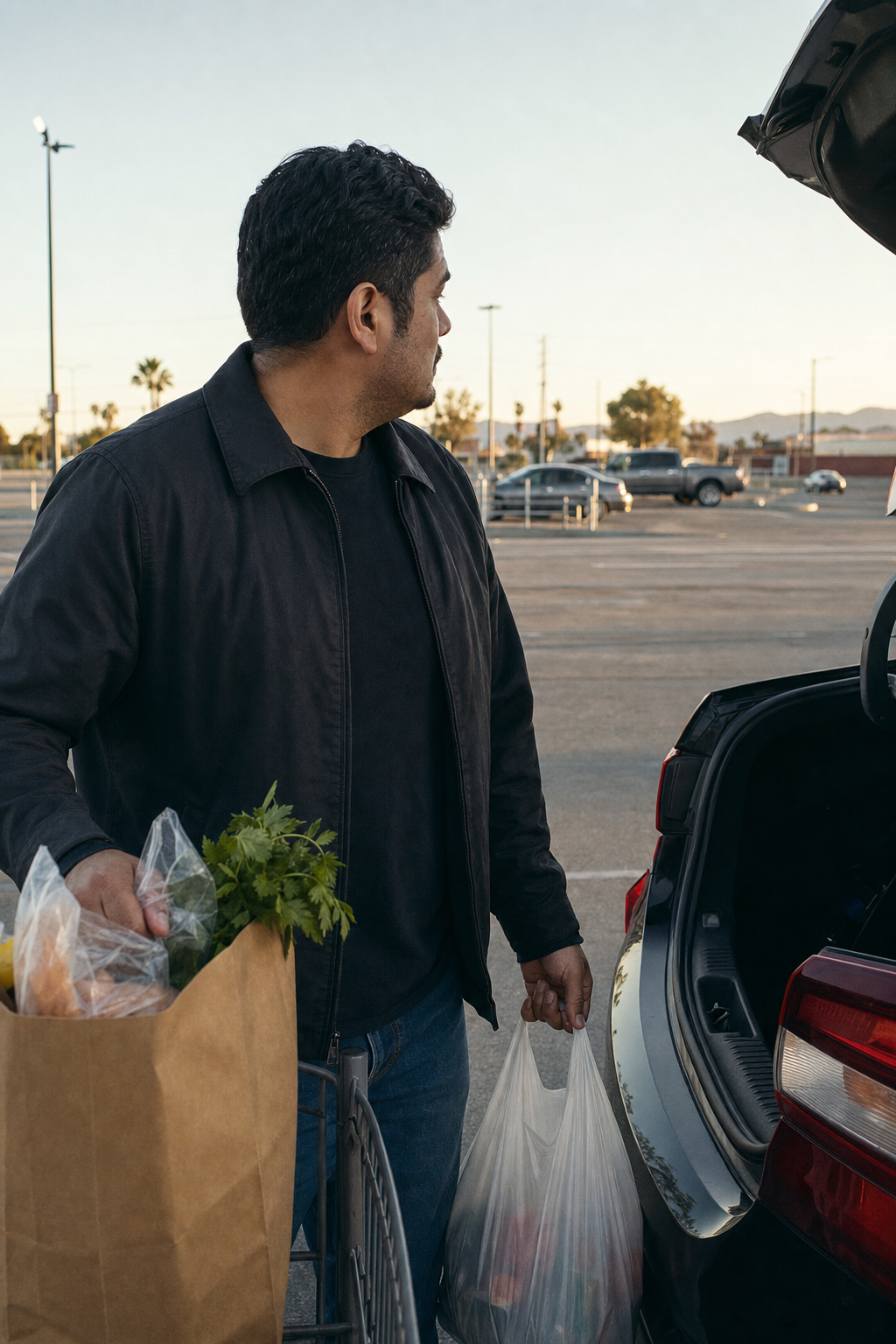
A grocery list is a family history.
Nobody writes one to be read later. That's exactly why they're honest.
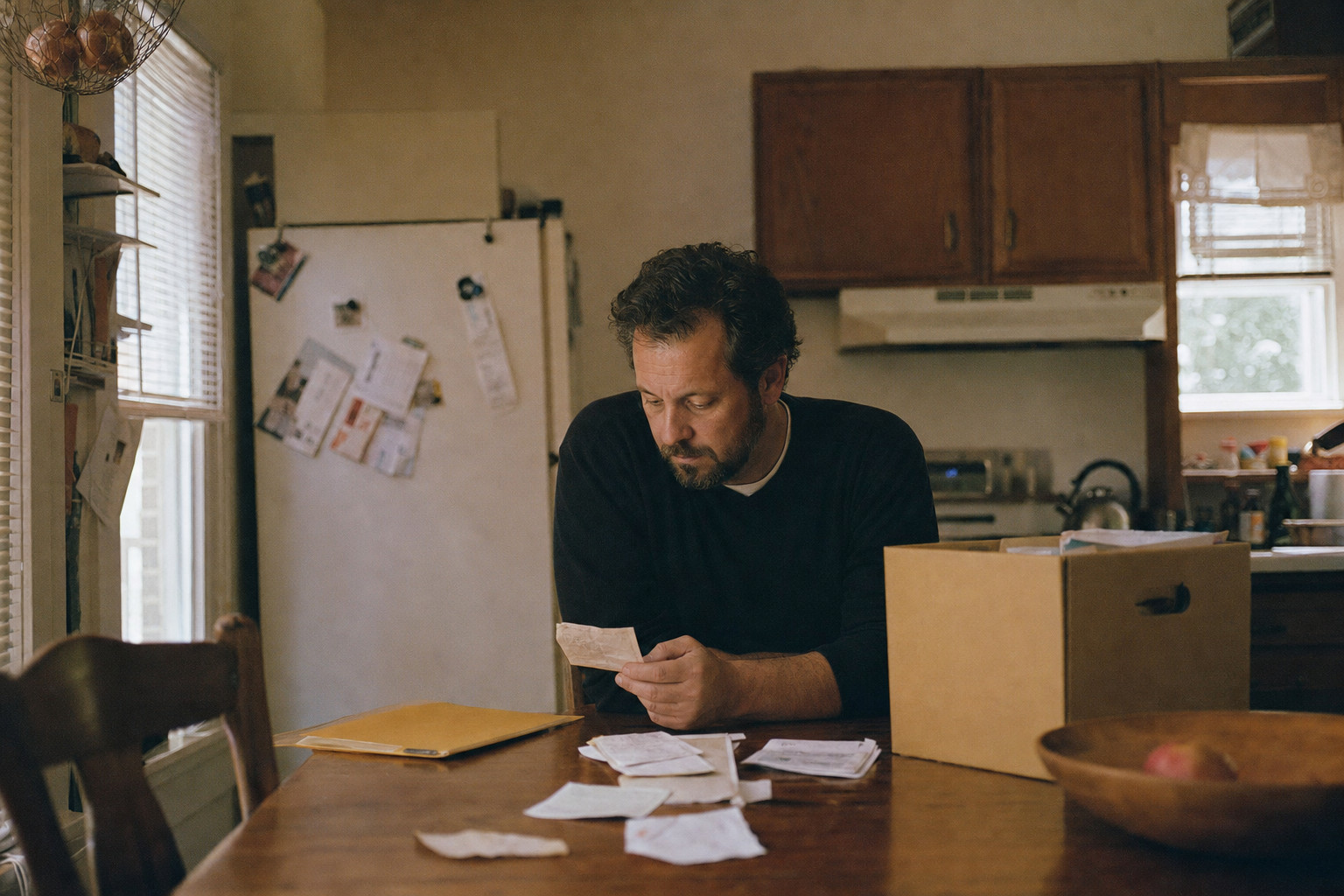
When Tomas Bell cleaned out his father's kitchen, he found four grocery lists — one under a magnet, three in a drawer with the takeout menus — and he could not throw a single one of them away.
They were not sentimental documents. One said: milk, bread, the orange cheese not the white one, batteries. That was it. But the orange cheese not the white one was his mother's handwriting, and she had been gone nine years, and the note was for a man who by then could not be trusted to remember which cheese.
A grocery list is the most honest paper in a house. Nobody performs on one. There is no version of you being written for posterity. There is only what the household actually consumes, in the order you walk the store.
You can read a family's whole arrangement off one. Who does the shopping. Who is being accommodated — the gluten-free bread, the specific yogurt, the juice nobody else drinks. When a kid was born, when a kid left, when somebody started a diet in January and abandoned it by the second week of February.
Read enough of them in sequence and you get a shape: expansion, contraction, illness, recovery, someone learning to cook for one.
Tomas kept them in the drawer of his own kitchen, which is where such things go. Not framed. Not scanned. Just in a drawer, with the menus, where you find them again by accident.
“It is the only document in the house written with no audience in mind.”
Otherwise Ordinary publishes original fiction and invented reporting. Names, places and businesses in this piece are made up.