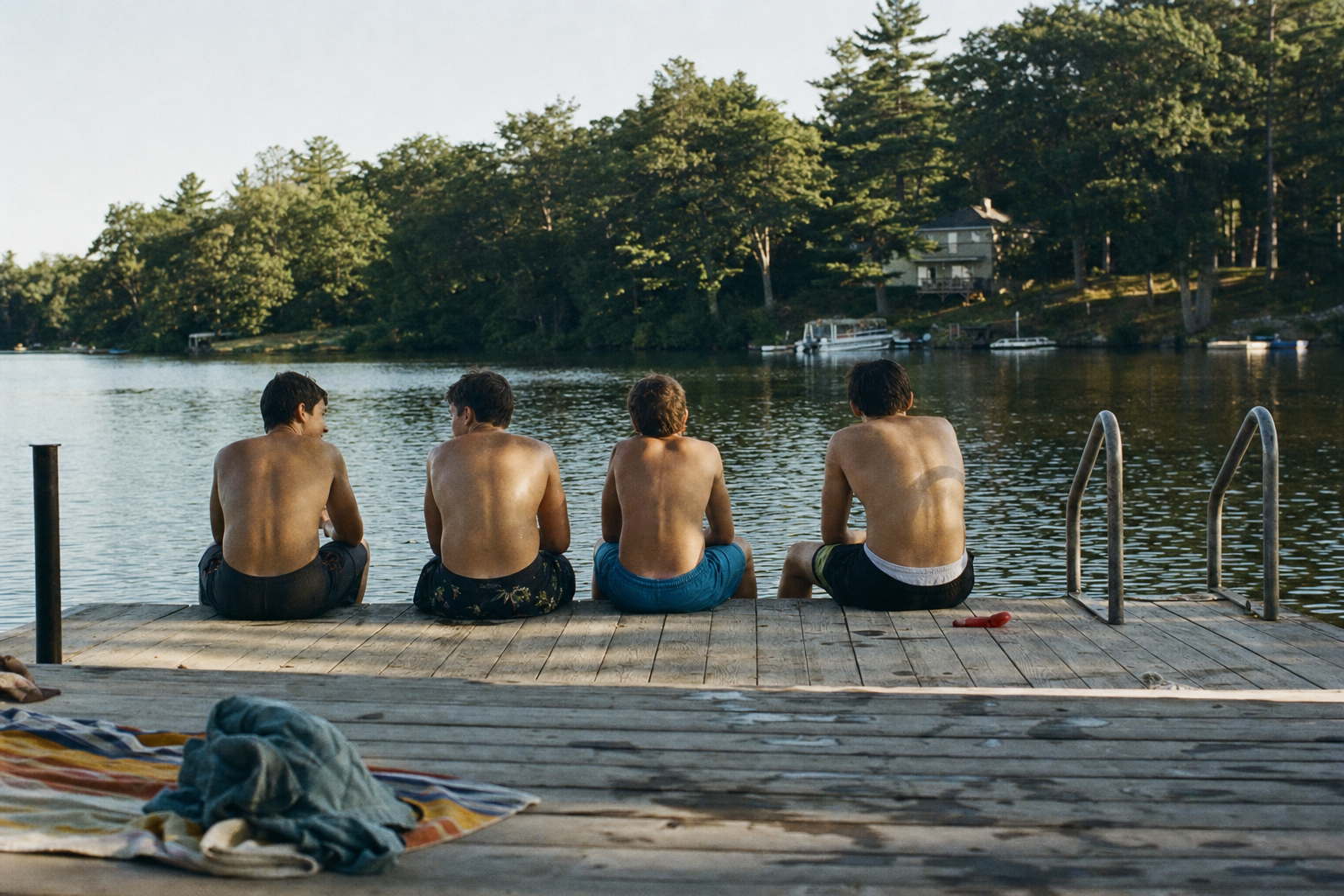
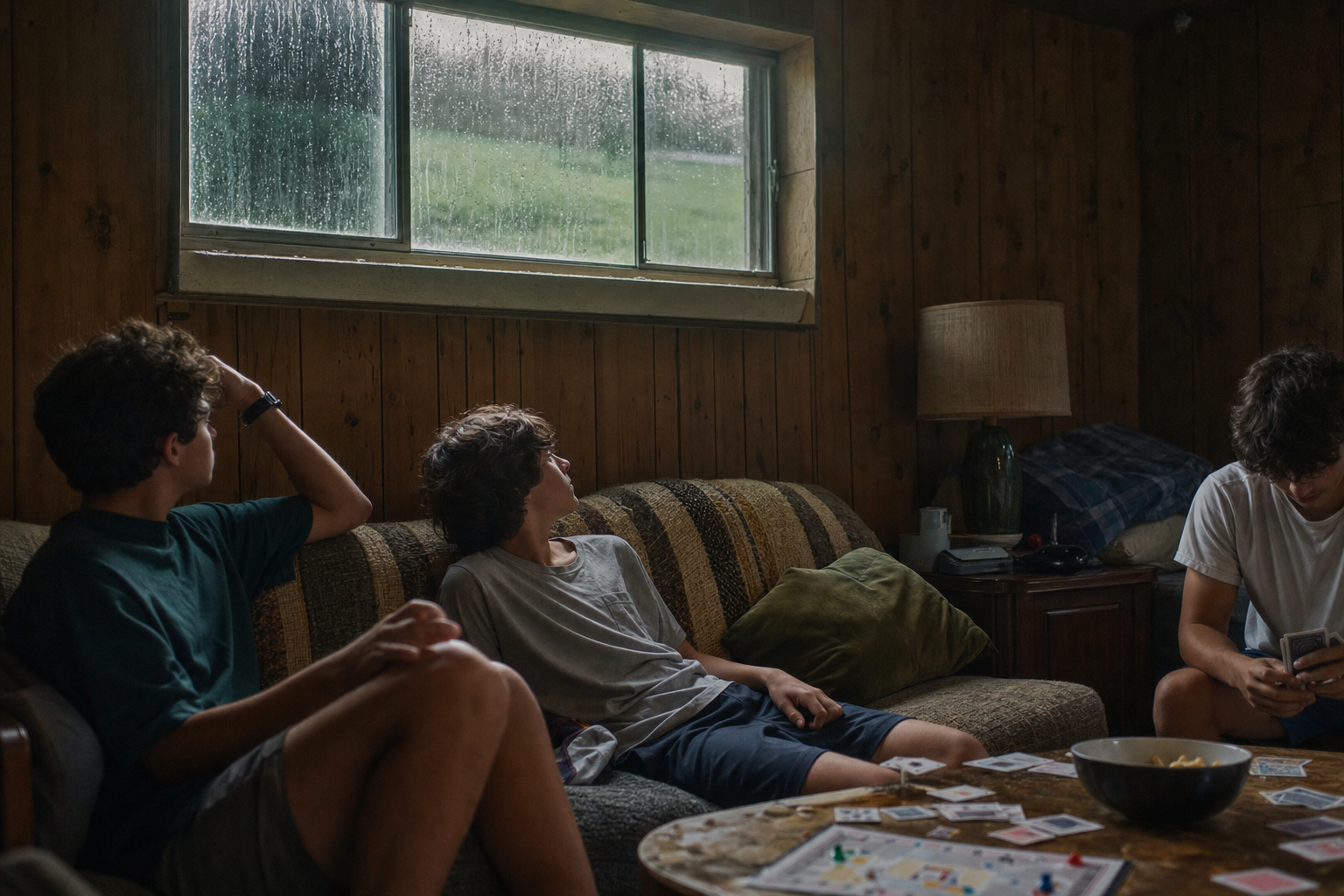
A drive-in movie, 1987.
Two hundred cars, one screen, and a soundtrack coming through a speaker you hung on your window.
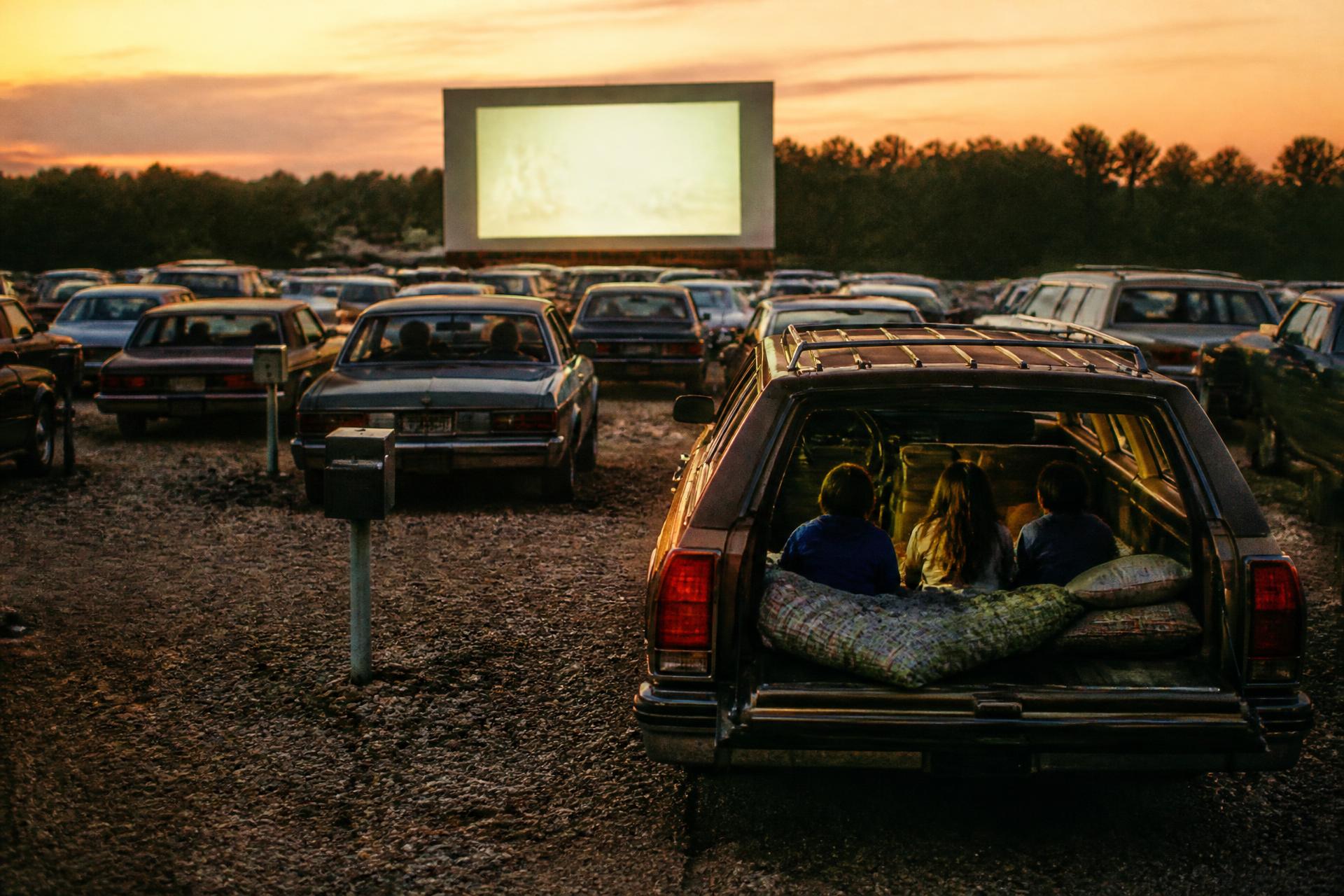
The photograph was taken from the back row of the Starlite off Route 9, on a Friday in July, about eleven minutes before the projector started. You can date it from the cars alone: boxy sedans, two hatchbacks, a station wagon with the tailgate down and three kids piled into the back with sleeping bags and pillows, staring out at the giant screen. That was the correct configuration. Adults in the front seat, kids in the back, snacks smuggled in a cooler because the concession stand charged like an airport.
Getting there was most of it. You left before dinner settled to claim a spot with a clean sightline, then spent twenty minutes rocking the car forward and back until the hood stopped cutting off the bottom of the screen. The sound came from a metal speaker you unhooked from a post and hung on your half-open window, which meant that for two hours you were also letting in every mosquito in the county. Later they moved the audio to FM radio, and everybody's battery died at the same time in the same parking lot, and the same three men walked the rows with jumper cables like it was a service they had agreed to provide.
None of that was the inconvenience people remember complaining about, because none of it was really in the way. Nobody watched the whole movie. That was never the deal. Kids fell asleep by the second reel. Adults talked through the parts they had already seen. Somebody walked to the concession stand and came back with the wrong order and nobody sent it back.
What you were buying, for four dollars a carload, was permission to be somewhere at night with no particular job to do. A living room you could not have at home, with the ceiling taken off. The movie was the reason you gave for going, and the reason mattered, because a family needs a reason to sit still together for two hours without anyone deciding it is a talk.
There were more than four thousand drive-ins at the peak. There are a few hundred now, most of them run by families who will tell you, unprompted, exactly what a new projector costs. They are not surviving on nostalgia, whatever the local paper says every summer. They are surviving because that four-dollar permission still has no good substitute, and the people who own them figured out early that they were never in the movie business at all.
“What you were buying, for four dollars a carload, was permission to be somewhere at night with no particular job to do.”
Otherwise Ordinary publishes original fiction and invented reporting. Names, places and businesses in this piece are made up.