The Truth in the Backyard
Five houses. Four families. One thing nobody on the street talks about.
- 01 — The Fence Went Up in Two Days
- 02 — What Marjorie Ptak Remembers
- 04 — What the Street Agreed to Call It
- 05 — What Has a Name
The Halvorsens' yard had been re-sodded in the spring, and by August you could still see the seams, a faint grid in the grass like a page ruled for handwriting.
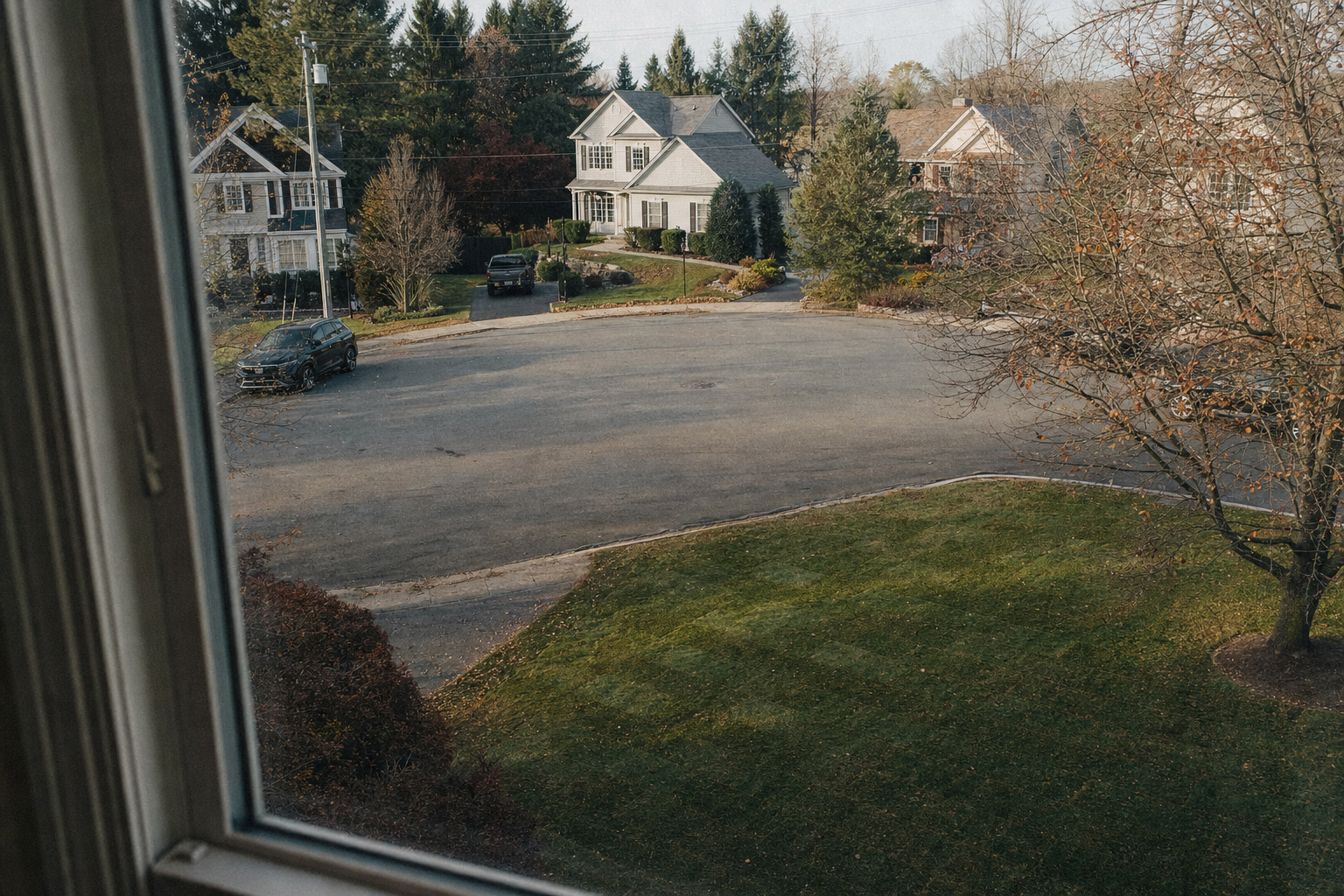
Nora noticed it from the second-floor window of number six, where she had gone ostensibly to look for a box of her mother's papers and actually to look at the street. From up there Briar Lane made sense in a way it never did from the sidewalk: five houses arranged around a bulb of asphalt, one way in, five sets of headlights that everybody could identify by sound.
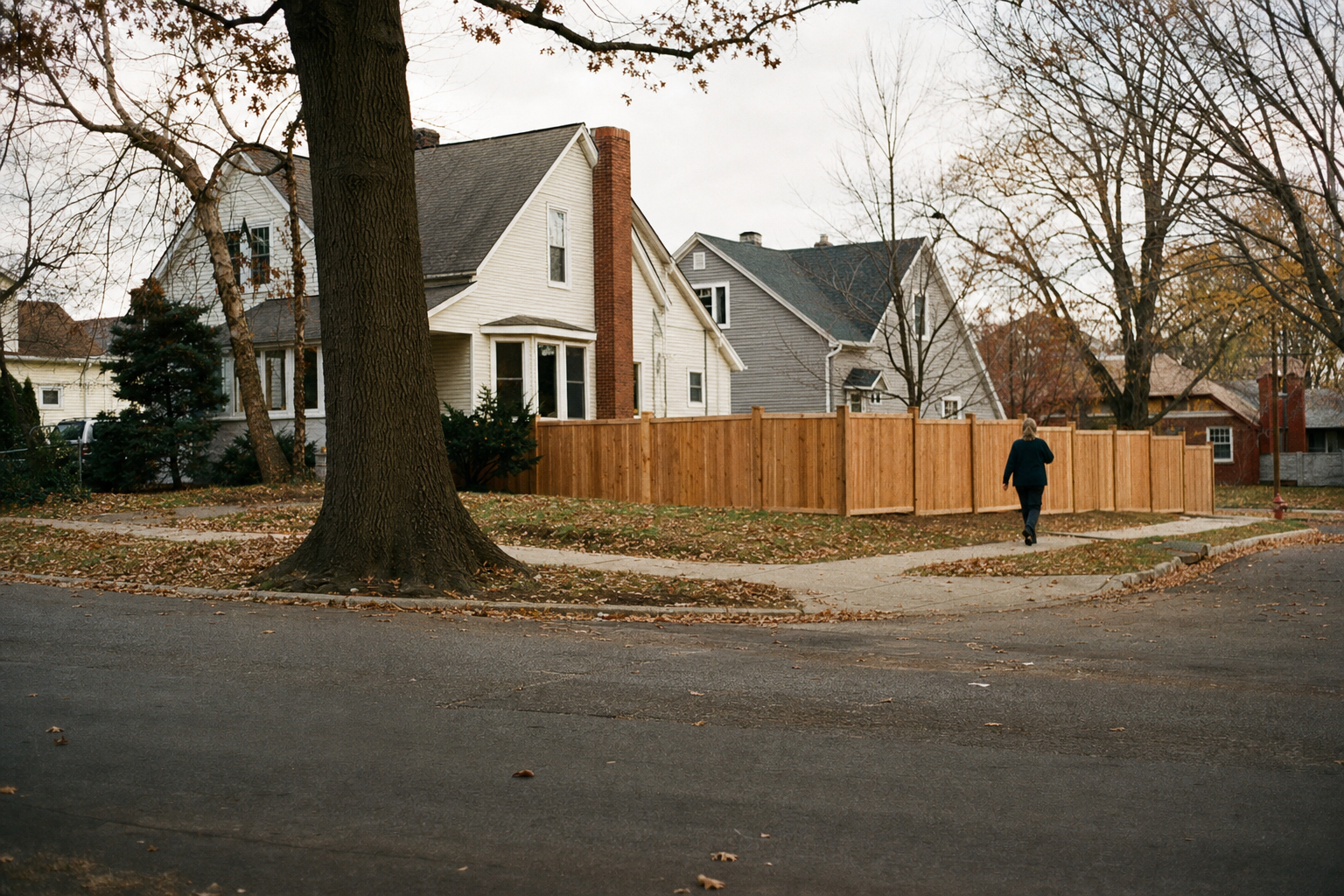
She had been eleven the summer the Halvorsens put in the fence. She remembered because the fence went up in two days, which on Briar Lane was a scandal in itself. Nothing happened in two days. People took a season to repaint a mailbox.
Downstairs, her brother was arguing with the estate lawyer on speakerphone about a plot number, and the word "survey" kept surfacing, and every time it did Nora felt the same small pressure behind her sternum.
Because here is what she had never told anyone: on the second night of the fence, she had woken at some hour with no name to the sound of a shovel. Not digging, exactly. A shovel being set down on a driveway. She had gone to this same window, in this same house, and seen Dale Halvorsen standing in his half-fenced yard with a flashlight held under his chin the way you hold it when you need both hands free and don't want the beam in your eyes.
He wasn't working. He was just standing there, looking at the ground, for as long as an eleven-year-old can stand at a window before her feet get cold.
In the morning there had been fresh sod over that corner, and the fence had gone up around it, and for thirty years the only thing that ever grew there properly was a stand of nettles that Dale mowed with unusual attention.
"Nora," her brother called up the stairs. "They need us to sign off on the property line."
She looked at the seams in the new grass. Whoever had re-sodded it had gone right over that corner without asking a single question, because why would you. Grass is grass. A yard is a yard.
"Coming," she said, and did not move.
Across the street, Marjorie Ptak's porch light came on, the way it did every night at 8:15, whether or not anybody was expected.
“A cul-de-sac has one way in, which means everyone sees everyone leave.”
Otherwise Ordinary publishes original fiction and invented reporting. Names, places and businesses in this piece are made up.