There were once more than 2,000 of them.
The rise and quiet disappearance of the discount store that anchored a thousand small towns.
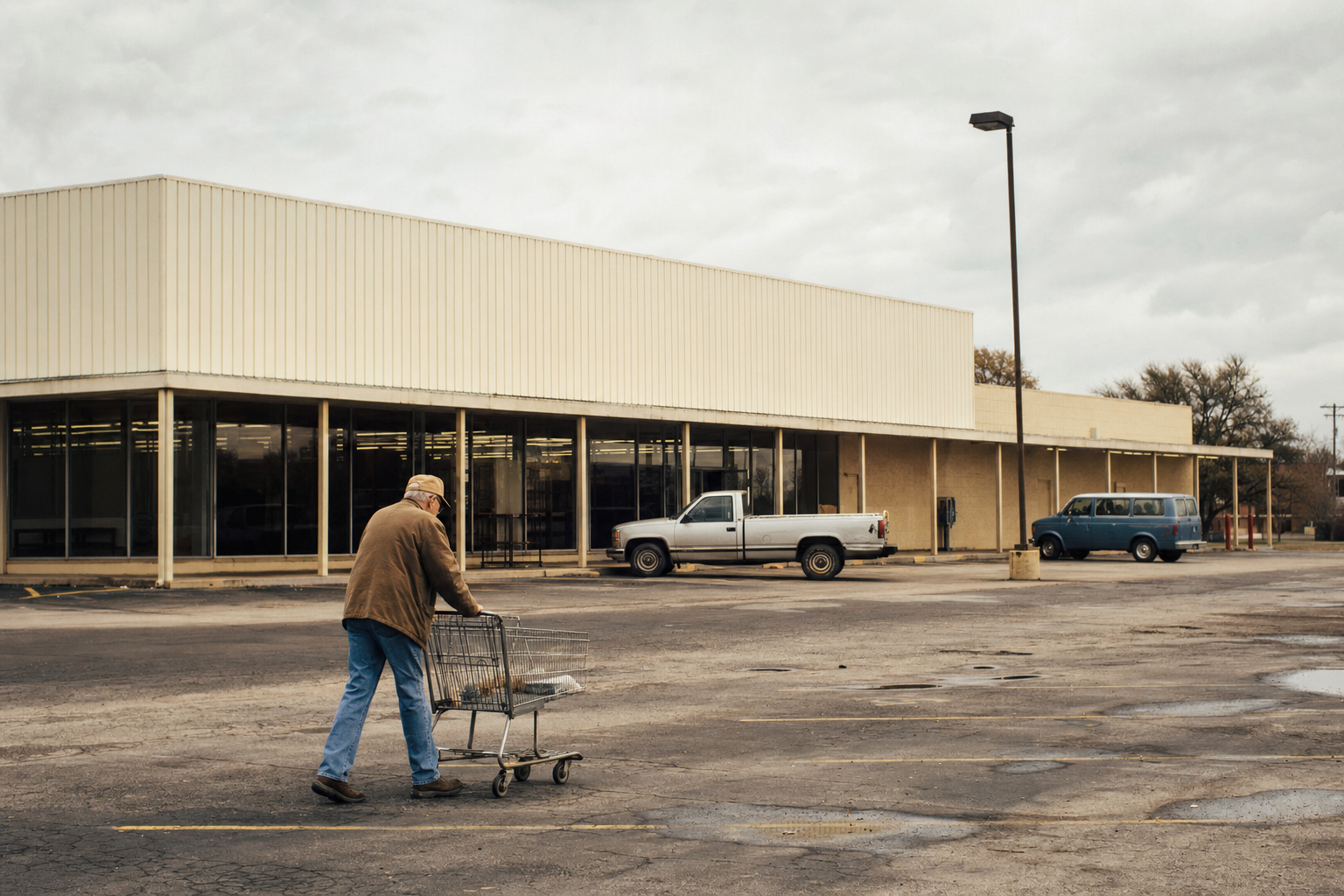
The chain in question — we'll call it what everyone in Ferris County called it, "the big store" — opened its first location in 1968 in a converted feed warehouse and its last in 1994 in a purpose-built shell off a state highway.
At its peak it had more than two thousand locations, which meant that for a certain kind of town it was not a store but the store: the place you bought a garden hose, a communion dress, a fishing license and a birthday cake in one trip, from a cashier whose kid was in your kid's class.
What killed it was not one thing. It was a decade of small margin decisions, a distribution network built for a slower country, and a real estate strategy that assumed people would always drive fifteen minutes for a garden hose.
The closures were announced in batches, always on a Tuesday, always in a press release with the word "optimization." A store would get sixty days. The last three weeks were a liquidation carnival with paper signs in the windows, and people came from four towns over to buy shelving units off the walls of a store they had not visited in nine years.
"Everybody was very sad and nobody had shopped there since 2011," said a former assistant manager who spent nineteen years with the company. "Both things were true. That's what got me."
The buildings mostly became one of four things: a church, a gym, a county office annex, or nothing. The parking lots stayed. Asphalt is the most durable thing retail ever built.
Drive past on a grey afternoon and you can still read the ghost of the sign on the facade, the letters slightly less faded than the wall around them, spelling out a name that meant something specific to about forty thousand people.
“The parking lot is the last part to go. Asphalt outlives retail by decades.”
Otherwise Ordinary publishes original fiction and invented reporting. Names, places and businesses in this piece are made up.